
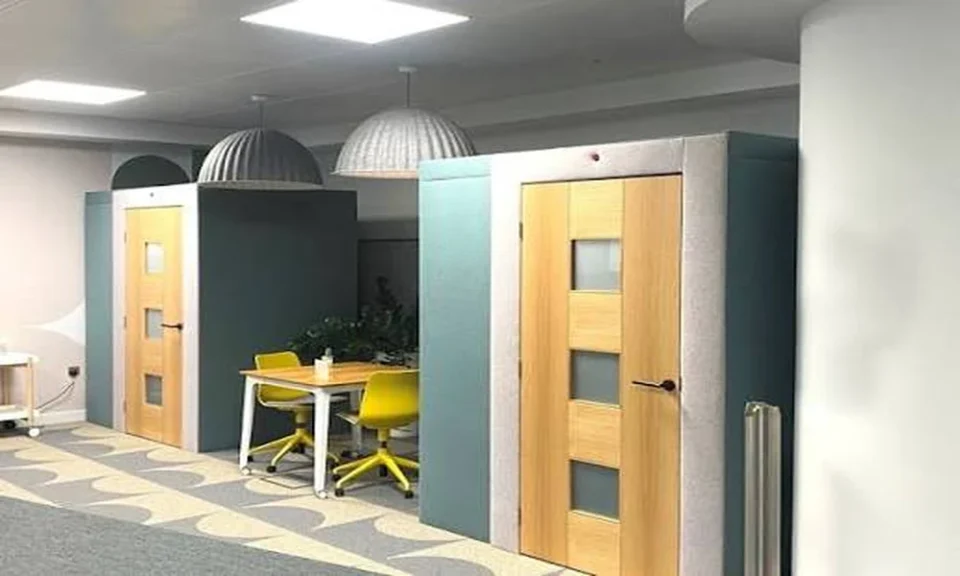
TL;DR: A single prayer booth tucked into a quiet corner of the office, paired with a shared booking calendar, covers most multi-faith prayer and reflection needs without a facilities overhaul. Soundbox Store’s acoustic pods cut incoming noise by roughly 30 to 35 decibels, which is enough to keep a short prayer break private on an open-plan floor. The actual fix: pick the right pod size for your headcount, set clear booking rules across faith groups, and review usage after the first month.
Multi-faith prayer rooms are no longer a nice-to-have in offices that run multiple shifts, host visiting clients, or employ staff across a dozen different backgrounds. The problem is rarely desire, it’s space: most floor plans were never built with a quiet room in mind, and converting a meeting room into a shared prayer space usually fails within a quarter because nobody owns the booking calendar. This guide covers the practical steps for setting up a prayer booth that actually gets used, from picking the location to handling the inevitable scheduling clash between a prayer slot and a client call.
What You’ll Need
- A low-traffic spot on the floor plan – a corner near an underused breakout area works better than the middle of an open desk bank
- One or two acoustic pods sized for the headcount using the room (a single-person phone booth for a small team, a two-person booth where people pray together or guide a colleague through the space)
- Access to a washroom nearby, since several faiths require washing before prayer
- A shared digital calendar (Outlook, Google Calendar, or whatever the office already runs on) to manage bookings
- A short, written set of house rules that staff from every faith group has seen before the room opens
Step 1: Define the Room’s Purpose and House Rules
Before ordering anything, decide what the space is for and write it down. A prayer booth that doubles as an unofficial nap pod or a place to take personal calls stops being available when someone actually needs it for a midday prayer or a quiet moment of reflection.
Spell out three things: who can book it, how long a session runs, and what happens during overlapping requests from different faith groups. Most offices that get this right rotate priority rather than running a strict first-come system, because prayer times are fixed by the clock in a way meeting room bookings aren’t.
This is also the point to decide whether the room is a single Soundbox Store pod or a small cluster of two. A single prayer booth handles a team of under thirty reasonably well if sessions are staggered through the day. Offices with multiple shifts or a larger religious population running several daily prayer windows tend to need two booths side by side so one group isn’t waiting on another. Soundbox Store’s private prayer and meditation pod guidance is written for exactly this sizing question, and it’s worth reading before committing to a single unit.
Write the rules assuming turnover: short slot’s for a quick prayer, longer slot’s for extended sessions, with a short buffer built into the calendar so nobody is caught mid-prayer when the next booking starts.
Step 2: Choose a Quiet, Low-Traffic Location
Placement decides whether the room gets used. A prayer booth dropped in the middle of a busy walkway gets skipped because staff don’t want colleagues watching them walk in and out several times a day.
Look for a spot away from the main thoroughfare, close enough to a washroom that staff aren’t crossing the whole floor twice, and away from anything that generates constant background noise like a kitchen or a photocopier bank. Corners near underused meeting room clusters usually work.
Avoid placing it directly next to the loudest part of the office – a sales floor or a call centre bank – since even a well-sealed booth has to work harder against constant noise on the other side of the wall.
Step 3: Pick the Right Pod Size for Expected Demand
Size the booth to the number of people likely to use it in any given prayer window, not to the total headcount of the office. A floor of two hundred people might only have a handful of staff praying at the same time slot, which a single-person booth handles fine if slot’s are staggered.
Soundbox Store’s range runs from single-person phone booths up to larger multi-person pods, and the office pod size guide walks through matching booth size to expected occupancy. For a prayer room specifically, undersizing is the more common mistake – teams assume one small booth will do, then find two or three people trying to pray at once during a shared lunch window.
If floor space allows it, a two-person Soundbox Store booth gives enough room for someone to pray alongside a colleague or guide a newer staff member through the space without the door staying shut on a solo booth the rest of the hour.
Step 4: Add Simple Comfort Features
Keep the interior plain and adaptable rather than decorated for one faith. A small shelf, a hook for a bag or coat, and a chair that can be moved aside or removed entirely covers most needs across different prayer practices without the room looking like it belongs to one group.
Skip anything permanent or faith-specific fixed to the walls. The point of a shared, multi-faith room is that it resets between users, so nothing in the booth should signal ownership by a single religion.
Step 5: Set Up a Booking and Scheduling System
A prayer booth without a visible booking system turns into whoever gets there first, which is exactly the setup that causes complaints. A simple shared calendar with named time slot’s solves most of this without needing dedicated software.
Soundbox Store’s pod booking and scheduling guide covers the practical side of running a shared calendar across a floor, which applies directly to a prayer room since demand clusters at the same few windows every day rather than spreading evenly like a meeting room.
Post the calendar link somewhere visible near the room itself, not buried in an intranet page nobody checks.
Step 6: Communicate Guidelines to Every Faith Group
Send the house rules to every team, not just the group that requested the room. A prayer booth introduced quietly to one department and discovered later by another creates exactly the exclusion the room was meant to prevent.
A short message from HR or facilities, plus a printed card inside the booth itself, covers most of what staff need to know: booking method, session length, and who to contact if the room is misused.
Step 7: Review Usage After the First Month
Check the booking calendar after four weeks. If one faith group is consistently unable to get a slot, that’s the signal to add a second booth rather than rewrite the rules again.
Low usage overall usually means the room is poorly located or badly communicated, not that the demand wasn’t real – revisit Step 2 before assuming staff don’t want the space.
Troubleshooting and Common Mistakes
Only one faith group books the room. Check whether the calendar invite or launch announcement reached every team, not just the department that first asked for the space.
Prayer times clash with meeting pod demand at lunch. Separate the booking calendars entirely so a prayer booth never competes with a Soundbox Store meeting pod for the same slot.
Staff say the room feels like it belongs to one religion. Remove any fixed decoration and replace it with the plain, adaptable setup from Step 4.
Noise from the corridor is still audible inside. Confirm the booth is sealed against the loudest adjacent source first – a kitchen, photocopier bank, or sales floor will test even a 30 to 35 decibel reduction harder than a quiet corridor will.
Nobody uses the room at all. Relocate before assuming the demand isn’t there; a booth tucked behind a plant room or down an unused corridor gets skipped regardless of how good the acoustic performance is.
Tools and Resources
- Soundbox Store acoustic pods – the single and two-person booths in the range are the practical fit for a shared prayer room; check current sizes and configuration on the prayer booth product pages
- A shared digital calendar – Outlook or Google Calendar, already in most offices, handles booking without new software
- A printed house rules card – a one-page summary kept inside the booth itself
- HR or facilities sign-off – confirming the room’s purpose before it’s communicated prevents the ownership disputes in Step 6
For offices weighing a prayer room against a wider faith and wellbeing programme, Soundbox Store’s guidance on acoustic pods for religious organisation staff covers adjacent use cases worth reading alongside this one.
FAQ
Does a multi-faith prayer room need more than one booth?
Only if several faith groups need overlapping time windows during the same part of the day. A single Soundbox Store pod covers most offices under thirty regular users if bookings are staggered across the day.
What size prayer booth works best for a shared office room?
A single-person booth suits solo prayer, which covers most use. A two-person Soundbox Store booth is worth the extra floor space if staff regularly pray in pairs or guide colleagues through the room.
Where should a prayer booth go on the floor plan?
Away from the busiest walkway, close to a washroom, and clear of constant background noise like a kitchen or photocopier bank. A quiet corner beats a central, visible spot every time.
How do we stop one department from dominating the booking calendar?
Publish clear house rules before the room opens and send them to every team, not just the group that first asked. Review the calendar after the first month and adjust priority rules if one group is consistently shut out.
Does the booth need to be decorated for a specific faith?
No – keep the interior plain and removable so it resets between users from different faiths. A shelf, a hook, and a moveable chair cover most needs without signalling ownership by one group.
Conclusion
Setting up a prayer booth for a multi-faith office comes down to four things that actually matter: a quiet location, the right pod size for expected demand, a visible booking calendar, and house rules every team has seen. A single Soundbox Store pod handles most teams under thirty if sessions are staggered through the day; larger or multi-shift floors do better with two booths running side by side. Get the location and the calendar right first – the acoustic performance of the booth itself is the easy part.
