
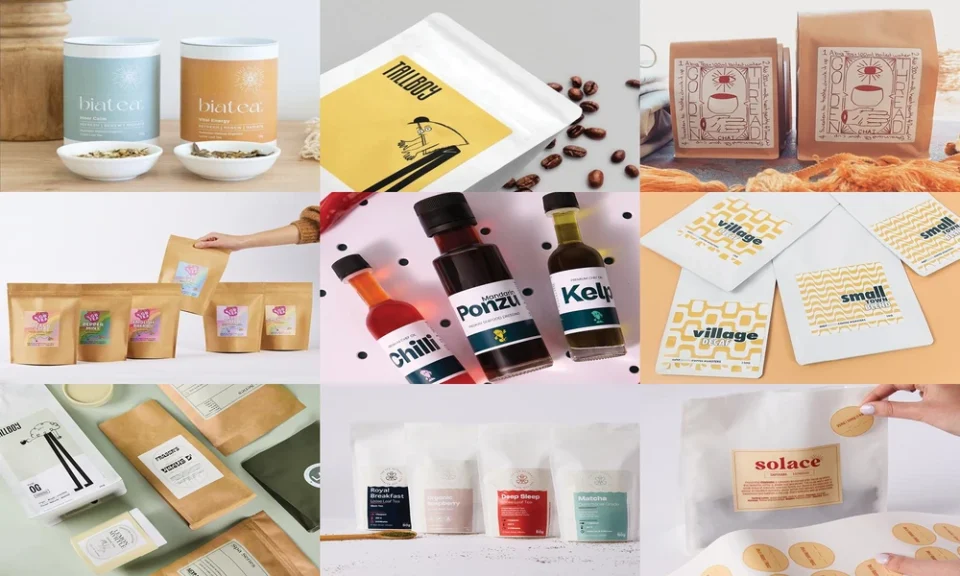
You already know a strong label helps people notice, understand, and choose your product. I focus on the practical steps that move the needle for growth, and I keep the process simple. The tips below come from working alongside founders and marketers who needed labels to do real work on the shelf and online.
If you are exploring custom product label printing for an Australian brand, this guide gives you a clear path: how to brief your supplier, what to prioritise in materials and print, and where to invest for reliable results. You will be able to plan smarter, avoid common mistakes, and pick a partner that supports your growth stage.
Start With a Tight Label Brief
A clear brief saves time and money. Before you design, lock in:
- Purpose: brand panel only, regulatory info, or both
- Format: single front label, front and back pair, or wrap
- Container: flat pouch, jar, bottle, tin, cylinder, or box
- Environment: dry pantry, fridge, freezer, humid, outdoor shipping
- Lifecycle: single use, refill, long shelf life
- Compliance: ingredients, allergens, nutrition, batch, best before, barcodes
I suggest you list these on one page and keep them visible during design. Decisions get easier when you see all constraints at a glance.
Choose Materials For Your Real World
Custom label printing in Australia offers strong material options. Match them to how your product is stored, shipped, and handled.
- Paper labels: matte or gloss white, easy to write on, kerbside recyclable. Good for dry goods, coffee, tea, candles, and carton labelling.
- PET labels: matte white, gloss white, clear, matte silver, gloss silver. Durable and water-resistant. Best for health and beauty, chilled items, supplements, and high-handling packs.
- Wine label stocks: premium paper with strong print performance and a quality finish for beverage and gift categories.
If you sell in humid or cold conditions, choose PET. If you want a natural look and recyclable feel, choose paper. Clear PET with white ink delivers a clean, no-label look on bottles and jars.
Lock In Size, Shape, and Placement
Decide how your label works with the packaging, not against it.
- Rectangles and squares maximise space for info
- Rounds and ovals feel approachable and are easy to apply
- Coffee bag labels help you keep the pouch generic while changing blends
- Die-cut shapes reinforce your brand and create visual cues on the shelf
Measure your flat area, leave a safe zone around edges, and confirm curved-surface fit for bottles and tins. A small mockup printed on office paper can prevent costly mis-sizing.
Get Colour and Print Right
Strong colour choices and clean type improve legibility and impact.
- Use CMYK colour, and add white ink for printing on clear or metallic materials
- Keep contrast high, especially for small text
- Avoid font sizes below 6 pt on print, and above 8 pt for long copy
- Place barcodes on flat areas, with quiet zones clear of design
- Check brand colours against the actual material under store lighting
Ask your supplier for proof if you are testing new colours on clear or metallic stocks.
Plan Quantities With Testing in Mind
Growth brands need flexibility. Low minimums let you test variants, seasonal runs, and small launches without overcommitting.
- Aim for an MOQ that supports trials, such as 50 units per design
- Batch SKUs together to reduce handling time
- Reorder slightly early to protect against out-of-stocks
- Keep version control tight on file names and dates
Short runs help you learn fast. Once you confirm the hero variants, lift volumes confidently.
Prepare Print-Ready Artwork
A tidy file speeds production and reduces risk.
- Include 2 to 3 mm bleed and clear dielines
- Keep key text and logos inside a safe zone
- Supply vector art for logos and barcodes
- Set white ink and spot finishes on separate labelled layers
- Use high-resolution images at 300 dpi or higher
- Outline fonts or include font files
- Confirm roll direction, core size, and gap if you use applicators
I encourage a quick preflight checklist before you send files. Ten minutes now is cheaper than reprints later.
Use Finishes With Intention
Premium finishes can separate your product on the shelf if used sparingly.
- Hot foil for key accents like a logo seal
- Emboss or deboss for tactile cues
- Soft-touch or textured papers for a premium feel
- Holographic elements for limited editions
- Spot gloss on matte for contrast
Pick one hero finish and keep the rest simple. The goal is clarity first, polish second.
Think About Application Early
Labels fail when application is an afterthought.
- Match adhesive strength to surface type and temperature
- Choose roll orientation for your applicator or for easy hand application
- Test on your exact packaging material, curved surfaces, and closure areas
- Wipe surfaces clean and dry before applying
- If you hand-apply, use guides or jigs to keep placement consistent
A five-pack test on production packaging will reveal any lifting or wrinkling.
Why I Recommend The Packaging People
For custom labels Melbourne teams can produce quickly, The Packaging People stand out for practical reasons. They are based in Melbourne with fast turnarounds, which helps you move from prototype to shelf without long delays. Their digital CMYK plus white printing supports clear, metallic, and coloured materials with accurate colour and sharp detail. Low minimums from 50 units per design help you run pilots, seasonal packs, and small retail tests.
They offer a wide range of papers and PET films, along with specialty finishes like foil, emboss, deboss, holographic effects, and custom die cuts. Their label offering covers rectangles, squares, rounds, ovals, coffee bag labels, and fully custom shapes. Artwork checks add a layer of quality control before production. If you need broader packaging support later, they also supply pouches, boxes, tins, and more, which makes it easier to keep your brand consistent across product lines.
If your priority is custom label printing Australia wide with flexible quantities and reliable quality, they are a strong option to consider.
Budget Smarter Without Cutting Corners
Cost control is not only about unit price. It is about the total cost of execution.
- Consolidate orders across SKUs to reduce shipping touches
- Use one base label and add a small variant sticker for micro-runs
- Keep colours consistent across SKUs to streamline proofing
- Avoid heavy ink coverage on uncoated papers if scuffing is a concern
- Reserve premium finishes for your bestsellers
Track per-unit cost by run size and use that data in forecast planning.
Put It All Together
Your plan is straightforward: define the brief, select the right material, design for clarity, prepare clean files, and test on real packaging. With a partner like The Packaging People, you get low minimums, speed, and a full set of label options that support both trials and scale.
Build a simple test batch, learn from real use, and then lock in the version that earns repeat purchases. That steady approach to custom product labels will support stronger launches and cleaner brand recognition across every channel.
